
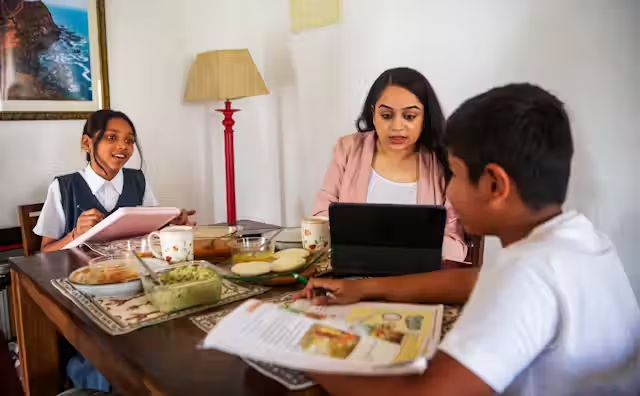
When immigrant women arrive in a new country, they bring with them customs that hold memories and heritage. Some are centuries old while some are newer, and all carry the imprint of family and community. Over time, these customs change, assimilating to newer surroundings yet continuing to hold their essence as living culture adapting with care.
Festivals are a medium of this adaptation. Diwali lights may be lit on a weekend when families can gather after the work week. Ramadan iftars might be shared in a community hall instead of a family courtyard. Hanukkah candles, Vesak prayers, Christmas carols, or Baisakhi dances often take place shared spaces and through the diversity of potlucks that bring these cultures together. While the calendar and climate of America impact the presentation of these celebrations, the heart of tradition remains steady in women’s hands carrying these customs forward.
Food carries another story as recipes meet new ingredients and find new variations. Traditional usage of palm sugar might give way to brown sugar. A Mediterranean dish might use olives from California groves. As kitchens become places where heritage and adaptation mix in every bite, the taste reminds families of home while also reflecting the land they now live on.
Language changes can also affect everyday life. A sentence may start in English, slide into a mother tongue, then switch back again. Children grow up answering in a blend of both, creating a family dialect that belongs to their household alone.
Clothing changes mirror the effects of weather in a new land. Women might wear saris in lighter fabrics for hot summers or kurtas layered with jackets in snowy winters. Hijabs are styled with knitted caps or hooded coats in cold weather. Hanboks appear in lighter cottons during humid summers, while kimonos are worn with thermal layers beneath for fall festivals.
Even as the forms change, the meaning stays. Tradition continues as women carry it forward with creativity and care. What changes in form stays whole in meaning, woven into daily life and continually taught, shared and passed forward in a new land
 She Carries Culture